

Making Private Sector Engagement Effective in Nepal
In recent years, both the government and the development partners in Nepal have realized the importance of private sector partners in attaining development targets stated in Sustainable Development Goals (SDGs). Major development agencies like USAID and DFID have implemented multi-year, multi-million-dollar projects to support the growth of the private sector in the country. Various interactions and programs have been conducted to encourage better engagement from the private sector in development initiatives.
However, the question still remains about whether such programs have been truly successful in aligning the goals of the private sector to those of the government or the development agencies and ultimately SDGs. As Biruwa Advisors has served as a technical partner and consulting agency in several of the programs for Private Sector Development, it sees the need for more effective engagements and precise interventions to truly make such programs work in Nepal.
USAID recently came out with its Private Sector Engagement Policy, where it states that “private-sector engagement is fundamental to our goal to end the need for foreign assistance.” While this is a goal worth striving for, the way such engagement-oriented projects are carried out has often resulted in the outputs not matching its original objectives.
Through our work, Biruwa Advisors has outlined the following simple steps to overcome some of the challenges that we see in the private sector engagement projects in Nepal:
Engage and Align Goals: Governments and development agencies need to interact with potential private sector partners to understand their needs and motivations while attempting to identify shared goals where meaningful partnerships can thrive. Before any project is designed, necessary stakeholder interactions need to take place not just in boardrooms in Kathmandu, but also with potential program partners and beneficiaries in rural areas, for whom the programs are designed.
Create Necessary Enabling Environment: Private sector-oriented interventions require the necessary enabling environment like adequate government policies, access to finance and technical assistance for the projects to achieve its objectives. Due to the agendas that development organizations are guided by, the comprehensiveness of business facets is often not addressed. With organizations targeting only certain business support requirement, they are not being able to address business and management issues holistically. The failure to address holistic support for businesses mean unsatisfactory development results at the end.
Evaluate Program Beneficiaries and Tailor Interventions: Development programs often have the tendency to assume that all program beneficiaries are in the same stage of business growth and tend to provide interventions without taking time to understand individual project beneficiaries. This can sometimes lead to program beneficiaries not getting the support that they truly require. Thus, development projects should take the time to study each individual beneficiary and attempt to tailor assistance based on their needs.
Pilot Programs at a Smaller Scale before Full-Scale Implementation: Too often development programs have lofty goals and program interventions are designed to maximize impact. However, as with any program design, many assumptions are made regarding how the stakeholders or beneficiaries will react to the interventions. In several cases, development projects do not bring about desired results and yet fail to adapt to market realities. This is also escalated by the changing market needs and demands as most of the projects are multi-year. Thus, piloting the interventions at a smaller scale would test theories and allow for the implementing agencies to make necessary programmatic changes where necessary before intervening at a full-scale.
Need to Mobilize and Support Local Government Bodies: With the outset of federalism in the country, the local government has been delegated with more power and authority. They play a prominent role in developing policies and making decisions at the local level. Any program that is directed towards local development requires acceptance and support from the local body. Therefore, if development programs could be designed in a way that mobilizes and supports local government bodies then program implementation could be carried out more efficiently and effectively. As Biruwa has witnessed that the majority of the local bodies want to attract private companies and want to benefit their communities, they are clueless about planning and execution of such activities. If development organizations can support such local bodies, it will create a lasting impact in private sector development at the local level setting them as a role model for others to follow.
Use of Team Members and Project Partners who have Understanding of the Private Sector:
It is not uncommon that development programs are filled with development professionals with little exposure to the private sector. As a result, many programs are designed without truly understanding the needs and motivations of the private sector which leads to implementation becoming problematic. Thus, adequate resources in the team who have an understanding of such programs can improve program results.
Nepal’s economy is fledgling and recent federalization of government bodies has meant that there are many changes in how the economy functions. To build a thriving private sector that can help achieve targeted development goals, the government and development partners have to effectively design programs and ensure that implementation of the programs addresses the needs and motivations of the private sector.
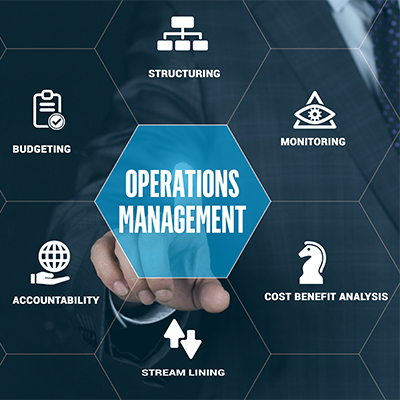
Top 5 tips for Entrepreneurs to Manage Operations as they Scale up
A lot of entrepreneurs in Nepal tend to get anxious and hesitant when it comes to expanding their business. It may be because of the considerable amount of planning and strategizing required, or the risk of using resources without getting any results. Why work on something if it is not broken is another mindset prevalent here. This is a common issue found among entrepreneurs which, if not addressed on time can lead to long-term stagnation and lack of growth in business activities of the startup.
However, these problems can be tackled by managing the operational activities of the business. A well-functioning operational system is a critical criterion and a huge contributor for business growth.
Biruwa Advisors has been providing operational management support to a number of businesses facing such problems. Based on our experience, we are listing out top 5 tips for operations management during scale up.
Structuring your Business
Most family-run and small-scale businesses lack a formal structure and operations are carried out based on the interest and priorities of parties involved. This results in gaps that can potentially lead to miscommunication, workflow complexity and delegation problems. It is highly probable for the organization to fall apart, if more work load is added into the existing structure during expansion. Successful scaling-up is thus, heavily reliant on the way the organization is structured.
Establishing a formal organizational structure gives a clear picture of the roles and responsibilities to the team members. Similarly, it helps to have a well-structured reporting system which can monitor new additions to operations and also adapt to create new positions as needed. This also allows the managers to shift focus from day to day fire-fighting to strategic level decision making.
Budgeting
Budgeting is something most of us know is a must but very few of us actually end up doing. If you ever wanted to save up to buy something expensive, then you may have planned to control spending and avoid unnecessary costs. Similarly, in a business environment, budgeting assists in operational and financial monitoring and control by providing an estimate and limit for expenses for different activities.
The insight into the expenditures allows a business to target and predict feasible goals. These goals need to be based on your target to scale up your business. It also helps you to compare the goals and expectations with actual performance during execution which is part of the next topic.
Monitoring
Monitoring system helps the management to keep track of all the activities of the business and compare them against the initial plan. For sustainable expansion of business, a clear picture of what is actually occurring at operational level is a prerequisite to avoid problems in the future. Inadequate monitoring of operational activities leads to errors and deviations going unnoticed in the short term and creating huge problems in the long run.
Through regular monitoring of key operational units, anomalies as well as opportunities are identified in the system. The output from these indications can help the business in reviewing their growth strategies.
Streamlining Business Processes
The large volume of activities and processes involved in running a business can get managers to lose track of their priorities which, delays them from streamlining their operations. In a lot of cases, they are busy in firefighting than focusing on growth. This results in redundant and expendable business processes going unnoticed in their organizations leading to stagnant business activity as well inefficient utilization of resources.
Streamlined business operations make the business more compact and simpler to manage. Scaling up strategies become much easier to implement as you can easily replicate the nature of current operations to the new ones.
Cost Benefit Analysis (CBA)
CBA helps managers to take better decisions through quantitative analysis on why a decision is superior to any other alternatives. CBA helps you to take decisions which have better benefit for your business. It is more rational than impulsive decisions which may have tempted the entrepreneur.
Getting a bargain on a property lease at a busy commercial intersection may tempt you to open up a new branch of your business. However, cost of logistics or even the unavailability of backup electricity in the property could raise the cost of opening the new branch over the benefits you intend to gain from it.
While scaling up, you will have to decide between many alternatives. With CBA at your arsenal, this process can be more easily executed.
Operations are core components of every business, so improving its management and control is integral for scaling up any business. We wish you luck for this exciting phase of entrepreneurship.
If you want to share your experience of scaling up or are seeking our assistance in this area, please feel free to get in touch with us.
Impact of Federalism on Nepalese Businesses
The Constitution of Nepal 2015 formally declared the country as a “Federal Democratic Republic”, meaning that the country is now divided into three tiers of government namely federal, provincial and local. This diffusion of power has delegated more authority to provincial and local government thereby helping to solve the problem of Kathmandu centrism. However, it might still take a few more years to implement federalism at a full-fledged scale. Since the country is in an infant stage of the federalist structure, all the policies, rules and regulations are not clear yet. Once the federal structure is implemented properly, slowly, the confusions will become clearer, hopefully resulting in a conducive business environment. Nevertheless, the opportunities and challenges that come along with it should be taken into consideration, especially by businesses so that they can tap into the opportunities to reap the benefits and overcome challenges effectively.
Wider Market
The capital is flooded with businesses that provide basic facilities such as schools and hospitals to entertainment services such as cinema halls and restaurants. International franchises have also not entered markets outside the valley due to the high concentration of population in Kathmandu. However, with the outset of federalism, currently, a centralized population in the capital is likely to disperse outside the valley. This is something that businesses should consider as markets in other regions of Nepal is expected to surge. Taking this into account, it would be a good strategy for businesses to strengthen their supply chain, distribution and presence in markets outside the valley at an earlier stage as it will be relatively easier to penetrate the market than later when the competition is higher.
Unclear Taxation Policies
The government has not yet clearly outlined the policies regarding taxation. Due to this, the state and local government have been interpreting the constitutional provisions and levying taxes as they seem fit without considering the problems faced by businesses and entrepreneurs. In many areas, the government has raised property tax, tourism tax, local resource utilization tax and imposed unnecessary fees and royalties on businesses. Thus, businesses have to be careful and ensure that they are not being double taxed. Although the lawmakers are still in the process to clear ambiguities concerning taxation laws, businesses need to keep in mind that the central government is primarily responsible for collection of major taxes such as customs, VAT, excise duties and income taxes whereas the state and local government collects revenues from vehicle tax, property tax, business tax, entertainment tax, tourism fee and other local taxes.
Businesses also need to consider the rate of taxes that are imposed in various states. Due to the differentiation in tax rates, the price of services may vary affecting competition in the market. Similarly, in the absence of effective tax mechanism, problems may arise in free delivery of services from one state to another. If the government decides to create tariff and non-tariff barriers on interstate delivery of services, businesses will face challenges based on pricing, inter-state competition, and profitability.
Ease of Doing Business
The latest statistics of World Bank-2019 ranks Nepal 110 among 190 economies in the ease of doing business. The concern now is whether the new federal structure will add another layer of bureaucracy or facilitate entrepreneurs and businesses. On a positive note, under the federal structure, business registration might become easier for entrepreneurs if the government allows registration to be done under their respective states. A very good practice can be learned from our neighboring country India where the procedure for business registration has been made simple through online registration. If such kind of system can be implemented in Nepal as well then it could reduce the cost, time and effort of the business.
However, this is only possible after the government sorts their internal matters first, regarding the clear distinction of roles and responsibilities among the three tiers of government. Due to such unclarities, the businesses have been imposed with double-taxation, high royalty fees, and administrative hassles. For instance, recent news stated the local government’s pressure on NGOs to be registered at municipalities to continue their activities in local federal units. If this trend persists, then the impact might soon be felt among businesses disallowing them to operate their business until they are registered at the local level. Thus, clear roles and responsibilities of the provincial and local authorities should be defined by resolving the loopholes that currently exist in the system.
State and Local Market-Specific Priority Sectors
The government at the provincial level is currently working on a five-year periodic plan incorporating a separate chapter for each province to address their specific needs. The periodic plan aims to make full utilization of human capital, expansion of accessible and modern infrastructure, improved production and productivity, a decent standard of living all accumulating in creating a civilized society. Moreover, various other local level programs are also being implemented for the effective utilization of local resources and service delivery to its citizens. These programs include Local Governance and Community Development Programme which is being executed under the Ministry of Federal Affairs and General Administration. Similarly, the government of Nepal with support from the Asian Development Bank is aiming to improve the urban services in eight municipalities namely Godawari, Bhimdatta, Biratnagar, Birgunj, Dhangadhi, Shuklaphanta, Nepalgunj and Siddharthanagar in the Terai Region of Nepal through planning, infrastructure investments, and institutional strengthening. In order to support these programs, the government is seeking assistance from various players including private sectors.
This comes as a piece of good news for businesses as they can now explore and invest in new markets besides the prominent ones. Moreover, in order to attract investments, the provincial government might assign specific priority sectors within the province by offering support schemes such as cash subsidies and tax benefits to businesses. This, in turn, generates healthy competition among states to improve their laws and policies creating a promising environment for businesses. In this case, businesses will have the choice to enter those provinces that are providing laws and policies that best suit their business mechanism or states that have the availability of resources required for their business operation. For instance, province no. 6 and 7 carry huge potential for hydropower, tourism, agriculture and herbal products. So, service businesses such as hotels, restaurants and other hospitality services will have an advantage in these regions. Likewise, there are greater efforts directed towards upgrading Province no. 2 from the poorest category through the special plan for its growth and development. Businesses should, therefore, keep an eye out for opportunities in these areas.
Conclusion
These are some of the major impacts that Nepalese businesses may encounter as a result of federalism. It might appear like a lot of challenges to deal with but with proper information and strategy, businesses can reap benefits from the new policies. With a higher level of power attributed to the local level, municipalities are seeking support from various private players for local development in areas such as health, education, road construction, and waste management among others. This serves as the perfect opportunity for businesses to collaborate with municipalities in their development plan. As entrepreneurs, it should be their flair to find problems disguised as opportunities and thus, should be in a constant search for it since the business scenario in Nepal might still look hazy for another few years while federalism is still at the seed stage.

How to Deal with Entrepreneurial Stress
Note: If you’re looking for an article to tell you that stress can be avoided. This isn’t it.
An entrepreneur can be defined as someone who takes on the burden of setting up a business, carrying the responsibility of it by taking personal and financial risks in hopes of profit.
The last little bit of the definition is key. Should this not be met, for the purposes of this article and perhaps in life, we should refrain from referring to them with the title. It is a most empowering and respectable role to fulfill in that it requires one to have a slew of qualities in order to succeed; qualities that some people may never possess in their entire lives because it puts them in the direct line of fire of man’s mortal enemy: stress.
Why it is so is fairly obvious, a business, especially a startup is much like a child that needs to be taken care of; except worse. Endless needs must be met before even the smallest hint of profit is realized, countless hours must be put in for the smallest improvements and the figurative blood sweat and tears are realized through sleepless nights, stressful days and personal sacrifices.
To top it all off, doing what’s necessary is not exactly our forté as species. We have been designed evolutionarily to do two things; survive and reproduce and as long as that happens, everything should be okay.
However, having evolved, we want more than just that (at least one should hope so), and this “natural” state of being that used to be our penultimate goal is now but a basic requirement alongside the myriad other things we seek to accomplish and achieve; giving birth to what is referred to as our “comfort zone” – something that sounds so lazy we hate to admit it is our natural state of being, it is also the very something out of which no growth occurs because growth involves change and change involves uncertainty and what does uncertainty breed in us?
You guessed it. Stress.
The interesting thing is, scientifically, stress is defined roughly as “any factor that disrupts our natural equilibrium.” So, it is unsurprising that pushing past this “comfort zone”, in order to foster growth is what causes stress. Thus, as an entrepreneur who is trying to grow the figurative business “child”, stress is not only unavoidable but is in fact necessary.
One could ramble on for another hour about the negative effects that stress has on individuals, but it is rather pointless, focusing on the negative aspect of a non-negotiable is as helpful as repeatedly checking your empty fridge hoping for something to show up. It won’t; unless you do something about it.
So, to help our budding entrepreneurs better manage this bitter, unavoidable necessity, let’s talk about a few strategies that could help.
Make friends with your stressors
Seriously buy them a drink or something. As obvious as it sounds, one way to look at stressors is as signals. You see, stress is the body’s way of telling you when something isn’t right, physiologically AND mentally. If something is bothering you, it usually has a reason. Look into it, identify it and if it needs to be fixed, then fix it. It really can be that simple. You see the satisfaction we seek lies in the work we avoid. Just. Get. It. Done.
Take some time to think about why you’re stressed out
If you missed the memo on the last point, here’s your reminder. Thinking about what is stressing you out is the Advil to your headache. Writing your thoughts down can help immensely in gaining clarity and thus allows you to break down your problem into smaller bite-sized pieces that are easier to chew on and eventually “swallow”, plus, it helps reduce the stress you’re feeling because now you’re actually doing something about it rather than simply allowing it to bother you.
Take Action
Need I say more? Many a time, the stress we face is an accumulation of stagnation. Analysis by paralysis as some like to call it. We’re so caught up in making sure we do the right thing that we usually end up doing nothing, essentially putting you on the hamster wheel where your mind is running frantically, draining you of precious resources that could better be utilized elsewhere; but you yourself are exactly where you started. This is not to say that you should be doing just about anything that comes to your mind—please don’t—but when solving a problem—don’t meander about your decision so much that you don’t end up making one.
Understand that it is a part of the process
This is where it gets philosophical, if you’ve only been looking at words thus far, this is where you want to start REALLY thinking about things. Any time we change things we WILL face discomfort, there is really no two ways about it. Anything we want in life requires us to suffer to some extent. Do you want a meal? You need to prepare it. Do you want a rocking six pack? You have to slave away for hours every day at the gym for it. Like I said at the start nothing grows in the comfort zone so as an entrepreneur trying to literally change your life through the growth of a business, there is no avoiding discomfort. The expectation that it is not so is oftentimes what messes it up for us.
Most people today (especially the “want-repreneurs”) are under the impression that negative state of mind we face when things really suck are unnatural. That it is not okay to sometimes feel like nothing is going right, to feel as though we are failures; to maybe even doubt ourselves. But the reality is, everyone feels that way at times; yes, even Superman. What separates the successful from the unsuccessful as you have hopefully noticed; is what they do when they face these obstacles. They aren’t born different. They just see things differently. You see the same hot water that softens the potato hardens the egg; learn to be an egg as stupid as it sounds. Let these challenges change you, be willing to suffer and it’s a promise that the rewards you reap will be well worth the effort.